DIY Outdoor Sauna Kit Installation: What You Need to Know Before Buying
Installing your own outdoor sauna kit is one of the most rewarding home projects you can undertake. The satisfaction of stepping into your first self-built sauna session is unmatched, but success hinges entirely on understanding what you're getting into before you purchase that first kit.
Through my experience overseeing thousands of sauna projects, I've seen too many enthusiastic DIY builders encounter preventable setbacks that turn their dream project into a costly nightmare. Poor site preparation, inadequate electrical planning, and mismatched kit selection account for roughly 80% of the installation problems.
The good news? Every one of these issues stems from decisions made during the buying phase, not the building phase.
Types of Outdoor Sauna Kits
Barrel Sauna Kits
Barrel sauna kits are one of the fastest-growing saunas in America. They have an aesthetically pleasing curved shape, are space-saving, and pretty affordable. They are compact and portable so that you can plop them anywhere in your backyard, no matter your space options.

However, barrel saunas are made for convenience and aesthetics, as they don't deliver the authentic Finnish sauna experience. Also, the curved walls and limited height make it difficult for heat to circulate in the barrel outdoor saunas.
Cabin/Traditional Finnish Sauna Kits
Cabin sauna kits provide maximum interior space and flexibility for bench configurations. The rectangular design matches traditional Finnish construction methods. This is how it looks:

SaunaLife Model G2 Outdoor Sauna DIY Kit
Cabin-style kits require more substantial foundations due to their weight distribution, but the construction process follows conventional building practices familiar to most DIY enthusiasts. The straight walls accommodate custom bench heights, better ventilation placement, and easier electrical routing. Through hundreds of cabin sauna installations, I've found these kits offer the best long-term satisfaction for families serious about regular sauna use.
Infrared Sauna Kits
Infrared sauna kits operate at lower temperatures (120-140°F versus 160-190°F for traditional saunas) and plug into standard 110V outlets.

Finnmark FD-3 Full Spectrum Infrared Sauna
While convenient for immediate use, infrared units don't provide the authentic Finnish sauna experience. The radiant heating feels different from the enveloping heat and humidity of traditional löyly sessions.
Things all great saunas have in common
Before I get into the details, here are the three main things you should look out for in a sauna kit:
Similar sauna Construction
One key design feature of a well-built sauna is the placement of benches above the sauna heater. This takes advantage of a principle called heat stratification. In simple terms, hot air rises while cooler air stays lower.
The steam and heat produced by the heater naturally rise toward the ceiling, which means the warmest, most comfortable air is found higher up. That's why the best saunas are designed with benches positioned above the heater level, so sauna-goers can sit where the heat and steam are most enjoyable.
That's how we constructed the Loyly Original:

Sauna Ventilation
All the best saunas are designed with proper ventilation in mind, and roof shape plays a surprisingly important role. A poorly designed ceiling can trap steam in "pockets," creating uneven heat distribution and an uncomfortable experience.
To avoid this, quality saunas feature ceiling shapes that allow steam and heat to flow smoothly, typically either a flat roof or a gently sloped one.
With sloped roofs, placement becomes critical. The heater should be installed at the lower end of the sauna, allowing heat to naturally rise and travel upward along the slope.
Benches, in turn, are positioned toward the higher side of the roof. This layout ensures sauna-goers sit where the best, most consistent air collects, maximizing comfort and the enjoyment of löyly (steam bursts from water thrown on the rocks).
This is how it looks:

With good ventilation, you'll also get equal air circulation throughout the sauna. This means the temperature at your head and feet will remain balanced, creating a more pleasant experience.
If ventilation is poor or missing altogether, the temperature difference between the top and bottom of the sauna can be extreme, sometimes exceeding 100°F. In that case, your head may feel uncomfortably hot while your feet stay cold, and you won't be able to relax.
3. Correct sauna heater
Choosing the right-sized heater is one of the most crucial decisions when purchasing or constructing a sauna. The heater must match the size and volume of your sauna room, as anything too large or too small will compromise the experience and potentially damage your equipment.
Let me explain:
If you purchase an oversized heater, your sauna will heat up too quickly, almost like a microwave. While this might sound convenient, it prevents the sauna stones from reaching their full heating potential. As a result, when you pour water over the rocks, you won't get the proper burst of steam (löyly) that defines an authentic sauna session. Instead, you'll end up with dry, uneven heat that feels harsh rather than soothing.
On the other hand, if your heater is undersized, it will struggle to raise the sauna's temperature. This makes sessions frustratingly slow and also overworks the heater, potentially shortening its lifespan or even causing it to break.
As a general rule, 1 kW of heating power is required for every 50 cubic feet of sauna space. You can learn more about how to choose a sauna heater size or take our sauna heater quiz.
Factors to Consider Before Buying An Outdoor Sauna Kit
1. Consider the space in your backyard
Before purchasing an outdoor sauna kit, the first thing to evaluate is the available space in your backyard.
Saunas come in different shapes and sizes, ranging from compact barrel saunas that fit just a couple of people to larger cabin-style models that can comfortably accommodate a family or group of friends. Measuring your backyard space carefully ensures that you won't encounter installation headaches later.
Think about the layout of your yard and how a sauna will fit into the overall flow. Do you want it tucked away in a private corner for peace and seclusion, or positioned closer to your home for easy access? Also, consider clearance space. Many sauna kits require additional space around them for proper ventilation, safe installation, and easy maintenance.
Another important factor is the ground condition. The area should be flat, stable, and ideally prepared with a foundation such as concrete, gravel, or a deck. Placing your sauna directly on grass or uneven soil could lead to structural problems over time.
2. Heater Type Selection
The heater is the heart of your sauna. It is responsible for heating the sauna and creating steam (löyly), the most enjoyable sauna air that comes when you throw water onto the heater.
Your choice of a sauna heater makes a big difference in the quality of the heat and steam, and the whole sauna experience overall. However, a great heater in an incorrectly designed & constructed sauna won't make the sauna great.
There are two major types of sauna heaters:
-
Electrical sauna heater
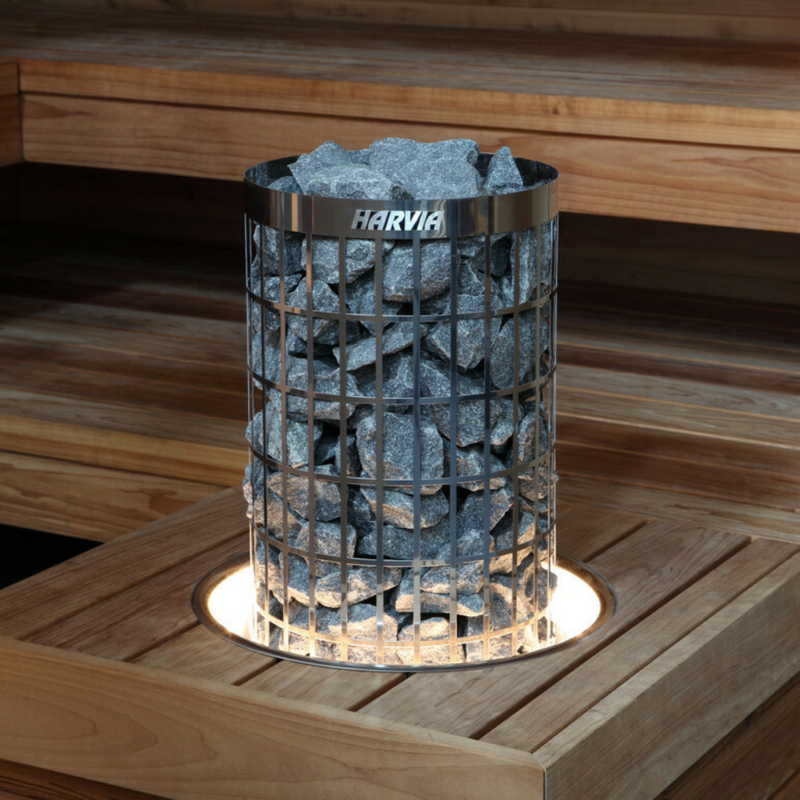
Electric heaters are the most common choice today, particularly for outdoor sauna kits. They offer precise temperature control, quick heat-up times, and reliable performance. HUUM and Harvia models come with timers or Wi-Fi-enabled controls, letting you preheat your sauna remotely.
-
Wood-fired sauna heater
Wood-burning stoves are the traditional option, delivering an authentic Finnish sauna experience complete with the crackle of firewood and the aroma of natural smoke.
They produce a softer, radiant heat that many sauna enthusiasts consider superior for relaxation. Also, they don't rely on electricity, and you can use them in off-grid settings.

HUUM Hive Mini 6 kW 240v Electric Sauna Heater
In this video, Andrus Kiisküla, the Head of Marketing at HUUM, explained why electric saunas are a better choice:
"…Electric is for people who have busier lives. It takes 60 minutes to heat up, and you can control it from an app - that's a huge plus. Additionally, in some cases, especially inside a house where you don't have a chimney to connect the wood fire, this feature is handy.
There's a misconception that in the Nordic countries, the true sauna is the woodfire sauna. They're not really true. If you have good ventilation, the right dimensions, and a good electrical heater like this one here with 100 plus kilos of rocks in that steam is mildly long."
3. Climate and Environmental Factors
When choosing an outdoor sauna kit, think about the climate and environmental conditions where you live. These factors will influence the type of sauna you should buy, how long it lasts, and how comfortable it will be to use year-round.
If you live in a colder climate with harsh winters, you'll need a sauna that is well-insulated and designed to withstand snow, ice, and freezing temperatures.
Proper insulation ensures the sauna heats efficiently without excessive energy or firewood use. You'll also want a durable roof design that prevents snow accumulation and protects against water leaks.
In these conditions, an electric heater may be more practical if you don't want to chop wood regularly; however, a wood-fired stove can provide cozy heat during cold winters if you prefer the traditional approach.
Environmental surroundings also play a role. For example, if your backyard has many trees, consider the potential for falling leaves, branches, and excessive shade or moisture. Similarly, if your area is prone to strong winds, choose a sauna with solid construction.
4. Number of people to use the sauna
Another important factor to consider before buying an outdoor sauna kit is how many people will be using it regularly.
Saunas are available in a wide range of sizes, from compact 1–2 person barrel saunas designed for personal use to larger cabin-style models that can comfortably seat 6–8 people. The size you choose will directly affect cost, installation requirements, and even the type of heater you'll need.
If you're planning to use the sauna as a private retreat for yourself or with one other person, a smaller unit is more than sufficient. These models are easier to install, heat up faster, and are typically more energy-efficient.
However, if your vision is to use the sauna as a social space – hosting friends, family, or using it as part of a wellness routine with your partner – you'll want to invest in a larger sauna with more bench space and stronger heating capacity.
It's also worth considering comfort. A "four-person sauna" may technically fit four people, but the experience could feel cramped if everyone wants to stretch out. For regular group use, it's better to size up. Larger saunas also provide more flexibility and allow sauna goers to lie down fully or sit comfortably without feeling confined.
Finally, think about future use. Even if you're starting small, you may find yourself inviting others to join over time. This ensures you won't outgrow your investment too quickly.
Take the Loyly Original, for example. This sauna is large enough to accommodate up to 10 people comfortably, but you can also use it for personal or couple time-out sessions:

5. Budget
Your budget is one of the most influential factors when purchasing an outdoor sauna kit, and it's essential to consider both short-term and long-term costs.
Sauna kits vary widely in price depending on size, materials, and features. As expected, small, entry-level barrel saunas for one or two people may start in the lower range. In contrast, larger, custom-designed cabin-style saunas with premium woods and high-end heaters can cost several thousand dollars.
When setting your budget, start by asking yourself: What do I want from this sauna experience? If your goal is a simple, private retreat for relaxation, a compact kit with standard features is all you need. However, if you envision a social hub for family and friends, or if you want luxury add-ons like LED lighting, panoramic windows, or Wi-Fi-controlled heaters, you'll need to allocate more funds.

Heritage LUX Piccolo Outdoor Sauna Cabin
It's also important to think beyond the purchase price. Additional expenses may include foundation preparation (such as a deck or concrete slab), professional electrical installation for electric heaters, or a chimney system for wood-fired stoves. Ongoing costs, such as electricity bills, firewood, and routine maintenance, should also be factored into your decision.
A smart way to plan is to set a budget range rather than a fixed number. This gives you flexibility to explore options while keeping spending under control. Remember, a sauna is not just a purchase. It's an investment in wellness, relaxation, and potentially property value. Ensure you choose the right one without breaking the bank.
6. Sauna Build Quality
The build quality of your outdoor sauna kit is one of the most critical factors to evaluate before making a purchase. Unlike indoor saunas, outdoor models are directly exposed to various weather conditions, including rain, snow, wind, and sunlight. A well-built sauna not only ensures durability but also improves comfort, safety, and overall performance over time.
Start with the materials. High-quality saunas are made from durable, weather-resistant woods such as Western red cedar, Nordic spruce, or thermally modified timber. These woods are naturally resistant to rot, warping, and insect damage, which makes them ideal for outdoor use.
Pay close attention to construction details as well. Look for features such as tongue-and-groove paneling, reinforced joints, and stainless steel fasteners—all of which contribute to the structural integrity.
7. Additional features for aesthetics
While functionality and durability are essential in an outdoor sauna, the aesthetic appeal should not be overlooked. After all, your sauna will likely become a focal point in your backyard, so its design should complement both your personal taste and the overall look of your outdoor space. Beyond just relaxation, a sauna can add charm and even increase the perceived value of your property.
Start with exterior design. Sauna kits like the Lowly Original come in sleek, modern styles with large glass windows that let in natural light and provide stunning views of the outdoors, like this:

… while others feature rustic, cabin-like finishes that blend seamlessly with nature. Consider whether you want your sauna to stand out as a statement piece or blend quietly into its surroundings.
Interior details also play a big role in aesthetics. Options such as soft LED lighting, glass doors, and panoramic windows can create a more luxurious and inviting atmosphere. Some saunas even offer upgraded benches, backrests, and ergonomic seating for added comfort and style.

Other features that enhance both look and feel include decorative roof shingles, custom wood stains, and exterior decking or steps. For those who enjoy night use, integrated lighting around the sauna exterior can improve both ambiance and safety.
Typical Price Range for Outdoor Sauna Kits
Entry-level to mid-range sauna kits, such as the SaunaLife Model G4, fall within the $6,000-$12,000 range, depending on size and wood grade specifications. These units feature superior materials, such as Thermo-Aspen benches, and more comprehensive hardware packages that simplify assembly and enhance finish quality.
Premium installations using manufacturers like Heritage or fully loaded Loyly Original units can reach $ 20,000-$30,000+ for complete packages, including integrated heating systems and luxury appointments. For those seeking premium outdoor sauna solutions with exceptional craftsmanship, consider browsing our Auroom outdoor saunas collection, known for their innovative designs and superior build quality.
Additional costs, including electrical work, foundation preparation, and professional assembly if desired, should be factored into total project budgets.
How Long Does It Take to Build an Outdoor Sauna?
Assembly time varies based on kit complexity, builder experience, and crew size. Simple 2-person barrel saunas with two experienced builders require 2-3 days for complete assembly, including foundation work. More complex cabin-style units often need 3-5 days with a similar crew composition. First-time DIY builders should plan for longer timelines, especially when learning proper techniques for tongue-and-groove assembly and ensuring quality results.
Conclusion
Your outdoor sauna kit is an investment in daily wellness that can transform your home life for years to come. The key to success lies in thorough planning, selecting high-quality kits, and paying careful attention to installation details.
Through proper preparation and realistic expectations, your DIY sauna project can deliver the authentic Finnish wellness experience that has enriched lives for generations. To help narrow down your options and compare different models before making your final decision, check out our comprehensive guide to the best outdoor sauna kits currently available on the market.
Ready to purchase your first outdoor sauna kit? Book a free consultation with me or any of our sauna experts.
FAQs
How much space do I need for an outdoor sauna?
You need approximately 16 - 100 square feet of floor space for the sauna itself. You also need to account for extra space for electrical service routing, foundation work, and material staging during construction.
Do I need a professional electrician?
Yes, 240V electrical installations require licensed electricians in most jurisdictions and should never be attempted as DIY work.
How do I choose between electric and wood-burning heaters?
Electric heaters offer convenience, precise control, and consistent performance, but they require substantial electrical service and incur ongoing operating costs.
Wood-burning stoves, however, offer an authentic experience and independence from electrical service, but they require active management and a regular fuel supply. Consider your priorities, as well as installation and operating costs in your area, before making a choice.
Can I install a sauna kit myself, or do I need professional assistance?
Yes, you can, but it's not always advisable. Most sauna kits require at least two people for safe assembly, particularly during the installation of the wall and roof. Heavy components and the need for simultaneous positioning make solo assembly impractical and potentially dangerous.
How long will a DIY sauna last?
High-quality sauna kits, made with proper materials and installed using correct methods, provide 15-25 years of service with regular maintenance. However, if you use an electric heater in your sauna, you might need to change the heating elements and stones every 3-5 years to keep it running, depending on the frequency of use.
Let’s get you a sauna
Need help with your sauna journey?
Book a sauna consultation with one of our US or Finnish based sauna experts.
Leave a contact request
Discuss with us right now? Just call (725) 777-5484