Outdoor Sauna – How to Choose the Right Sauna for Your Home and Wellness Journey
There’s something deeply satisfying about stepping into a perfectly heated sauna in your own backyard. No gym membership required, no scheduling conflicts, no sharing the space with strangers. It’s just you, the warmth, and the wellness benefits that come with regular sauna use.
But here’s the thing: choosing the right outdoor sauna isn’t as simple as picking the first model that catches your eye. The market is flooded with diverse options: barrel saunas, cabin-style Finnish saunas, infrared models, wood-burning units, and electric heaters. And each type has its own strengths, limitations, and ideal use cases. Some are better suited for compact urban backyards, while others shine in rural properties.
This guide walks you through everything you need to know to make an informed decision. We’ll cover the different types of outdoor saunas, the key factors that should influence your choice, and how to match the right model to your specific needs and backyard layout.
Why an Outdoor Sauna Is Worth the Investment
Let’s start with the most important question: why go through the effort and expense of installing an outdoor sauna at all? After all, you could join a gym with sauna access or visit a local spa. The answer comes down to accessibility, consistency, and long-term value.
When you have a home sauna just steps from your back door, you’re far more likely to use it regularly. Consistency is where the real benefits accumulate. Regular sauna sessions have been linked to improved cardiovascular health, better sleep quality, reduced stress levels, and faster muscle recovery after exercise.

These benefits compound over time, but only if you’re actually using the sauna multiple times per week, which is much easier when it’s in your backyard rather than across town.
Beyond the physical health benefits, there’s the mental and emotional aspect. An outdoor sauna can become a dedicated space for relaxation that’s separate from the noise and distractions of indoor life.

The act of stepping outside, firing up the heater, and settling into the warmth creates a clear boundary between daily stress and personal time.
There’s also the social dimension. A backyard sauna can become a wellness retreat where you entertain and spend time with friends and family. Some of the best conversations happen in the quiet warmth of a sauna, where the informal setting and shared experience create a natural connection.
Types of Outdoor Saunas and How They Differ
Before you can choose the perfect sauna for your wellness needs, you need to understand the landscape of what’s available. Outdoor saunas come in several distinct types, each with its own design philosophy, heating method, and user experience.
Here are the main types you’d see in the market:
Traditional Finnish Sauna (Cabin Style)
The traditional Finnish sauna is what most people picture when they think “sauna.” These are cabin-style structures with vertical walls, a peaked or flat roof, and a changing room or vestibule area in addition to the main sauna room.
The loyly original is an excellent example in this case:

Inside, you’ll find tiered wooden benches, proper ventilation, and a heater that produces both radiant heat and the option for löyly – that burst of steam you get when water is ladled onto hot stones.
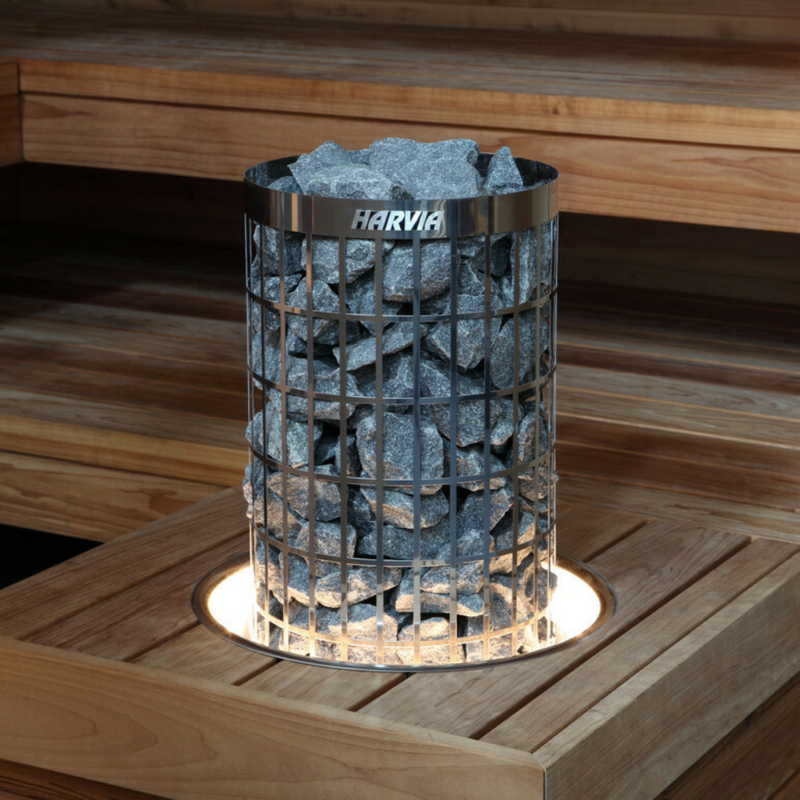
Traditional Finnish saunas can use either electric sauna heaters or wood-burning stoves. Electric models are convenient and can be remotely controlled. For instance, this is the HUUM freestanding electric heater in the Loyly Original:

Wood-burning saunas, on the other hand, provide an authentic experience with the subtle aroma of burning wood and the ritual of tending the fire. They’re ideal for rural properties where smoke won’t bother neighbors. Here’s the Huum Hive Flow LS Wood Burning Sauna Stove inside a sauna:

The cabin design has its advantages.
The vertical walls allow for more efficient bench layouts and better head clearance. The separate changing area keeps snow, rain, and outdoor debris out of the main sauna room.
Also, the traditional rectangular footprint gives you more placement options for your sauna heater. You can place the heater against a fence line, nestle it into a corner of your yard, or make it a standalone centerpiece.
Barrel Sauna
Barrel saunas have become popular over the past decade, and that’s because of their aesthetic appeal. Their curved walls create natural airflow patterns that heat the space more efficiently than in a traditional rectangular room. Because there are no corners where heat can stagnate, barrel saunas warm up 20-30% faster than cabin-style models of similar volume.

Inside view of the SaunaLife Model EE8G Sauna Barrel
This efficient design means you’re using less energy to reach and maintain your target temperature, whether you’re running an electric heater or burning wood.
The compact footprint is another major advantage. A barrel sauna takes up less ground space than a cabin sauna of comparable interior capacity. This makes it ideal for smaller backyards or properties where you want to maximize usable outdoor space.

The main trade-off with barrel saunas is that the temperatures are usually unequal in most barrel saunas due to being seated at floor level.. The curved ceiling means you’ll have less vertical space than in a cabin sauna, which can feel restrictive if you’re tall or prefer to sit upright on the highest bench.
Outdoor Infrared Saunas
Infrared saunas operate on a completely different principle than traditional Finnish saunas. Instead of heating the air to high temperatures, they emit radiant energy that directly warms your body.
The air temperature in an infrared sauna stays between 120-140°F, which is cooler than a traditional sauna. But you’re likely to experience even more intense sweating due to the penetrating nature of infrared heat.

The main disadvantage of an outdoor infrared sauna is that they don’t provide the authentic Finnish sauna experience, that is, the löyly. For purists who grew up with traditional saunas, infrared models can feel like a compromise. Traditional saunas provide immediate heat upon entering, and by adding löyly (steam from pouring water over the hot stones), you can adjust the humidity to your preference. In contrast, infrared saunas have a brief warm-up period, typically around five minutes, before the body begins to feel the heat and start sweating. Traditional saunas allow for the heat to be felt instantly when you enter the sauna and by making loyly, you are able to adjust the humidity. Infrared saunas have delayed heating time, at about five minutes, in that the body doesn’t start sweating or feeling the warmth until about five minutes.
Key Factors to Consider When Choosing an Outdoor Sauna
Once you understand the basic types, the next step is evaluating which specific features and characteristics matter most for your situation. These are the critical factors to consider when choosing an outdoor sauna that’s right for you.
1. Type of Heater
The heater is the heart of any sauna, and your choice affects installation, operating, user experience, and maintenance costs. These are the main types of heaters:
-
Electric saunas:

Electric heaters are the most common choice for residential outdoor saunas. They’re simple to install (though you’ll need a qualified electrician to run proper electrical service), offer precise temperature control, and require minimal maintenance.
- Wood-burning heaters
Wood-burning heaters appeal to those who value tradition and have the property to accommodate them. They produce what many consider the best sauna experience: the gradual, enveloping heat, the subtle smoke aroma, and the ritual of building and tending the fire.

Wood-burning saunas also operate completely off-grid, which matters if you have electrical service limitations or simply want the independence of not relying on the power company for your sauna sessions.
-
Gas heaters
Gas heaters exist but are uncommon in residential outdoor saunas. They offer faster heat-up than wood and independence from electrical service.

However, they require natural gas lines or propane tanks, proper ventilation, and regular maintenance of burners and safety systems. Unless you have specific constraints that make gas attractive, go with electric or wood heaters.
2. Size and Capacity
You also need to consider the size you’d want your sauna to be. This is because a sauna that’s too small might feel cramped and won’t accommodate guests or family members. On the contrary, an oversized sauna will take longer to heat, and this racks up your electricity bill.
To be on the safe side, choose a sauna size that comfortably fits the number of people who’ll use it most often, without wasting space or energy. As a general rule, a 4-person sauna works well for couples or small households, while a 4- to 6-person sauna is ideal for families or those who love hosting guests.
But these numbers assume people are sitting upright. If you want the option to lie down, which is one of the great pleasures of sauna use, you’ll need to increase the capacity.
Think about how you’ll actually use the space. Will it mostly be solo sessions where you can stretch out? Couples using it together? Regular gatherings with friends? Your usage pattern should drive your final decision.
3. Type of Wood
The wood species and grade you choose affect heat retention, durability, and aesthetic appeal. To choose the best wood, look out for these qualities:
- Low heat retention capabilities to keep the wood surface cool, even under intense heat
- Low thermal conductivity so that the heat doesn’t get conducted outside of the sauna
- Good acoustic properties so that the sauna remains quiet
- Heat and moisture tolerance
- Ability to absorb and release moisture
There are different wood options to use for your sauna. My top options are Aspen, Spruce, Alder, Pine, and Cedar.
4. Maintenance
Different sauna types and construction materials require different maintenance commitments.
Traditional wood-burning saunas need the most attention. You’ll need to remove ash regularly and clean the chimney (at least annually). Electric saunas are far simpler. The heater itself is maintenance-free, aside from occasional checks to ensure the heating elements are functioning and that the stones haven’t crumbled into dust.
Understanding the installation process before purchasing helps you accurately assess total project costs and timeline expectations. Our comprehensive guide to DIY outdoor sauna kit installation walks through foundation preparation, component assembly, electrical requirements, and finishing work—giving you a realistic picture of what's involved, which steps require professional assistance, and how to ensure your installation meets local building codes and safety standards.
For the interiors, you only need to clean properly and ensure they’re ventilated. After each session, leave the door and vents open to let moisture escape. Every few weeks, wipe down benches to prevent sweat buildup and potential bacteria growth. And once or twice a year, you can do a deeper clean of walls and ceiling to check for any signs of mold (rare in properly ventilated saunas but possible if ventilation is inadequate).
6. Aesthetic and Personal Preference
Finally, don’t underestimate the importance of aesthetics and personal preference.
Your outdoor sauna will be a permanent fixture in your yard, visible from your house and potentially from neighboring properties. The design should complement your home’s architecture and your landscape style.

The interior aesthetics matter too. Some people prefer the light, airy feel of natural Nordic spruce. Others love the rich, chocolate tones of thermo-treated wood. The bench layout, lighting, and window placement all contribute to the overall ambiance.

Consider also how the sauna fits into your broader vision for outdoor living. Is it part of a wellness compound that includes a cold plunge and outdoor shower? A feature in a garden that emphasizes natural materials and organic forms? An extension of your entertainment space where friends gather after outdoor activities? The answer to these questions should influence the design, size, and placement of your sauna.
For homeowners seeking premium materials, advanced features, and sophisticated design elements that elevate the backyard sauna experience beyond basic functionality, our guide to luxury outdoor sauna kits for backyard spa environments explores high-end options that integrate seamlessly into comprehensive wellness retreats, complete with designer finishes, superior insulation, and architectural details that complement upscale outdoor living spaces.
Final Thoughts
Choosing an outdoor sauna is all about understanding yourself: how you relax, which rituals enhance your life, and the trade-offs you’re willing to make in pursuit of wellness. There’s no universally “best” sauna, but there’s definitely a best sauna for you and your specific situation.
If you’ve made it this far, you now understand the landscape: the different types of saunas and how they differ, the key factors that should guide your decision, and how to match sauna characteristics to your property and preferences.
The next step is to narrow your options based on your non-negotiables. Start with a budget, which defines what’s possible and helps you focus on realistic options. Then consider space constraints and installation logistics. From there, let your preferences guide the final choice.
For those leaning toward the accessibility and convenience of a pre-engineered solution, exploring curated selections of best outdoor sauna kits can streamline your decision-making process by comparing quality, features, and price points across top-performing models in each category—from traditional Finnish cabins to modern barrel designs.
FAQs
What’s the difference between an indoor and outdoor sauna?
An indoor sauna is installed inside your home, often in a bathroom, basement, or dedicated wellness room, where it’s protected from weather and easier to access year-round. It usually heats up faster and requires less insulation.
An outdoor sauna, on the other hand, is built as a standalone structure in your backyard or garden. It offers a more authentic, nature-immersive experience and can often fit more people. But it needs weatherproof materials and stronger insulation to handle outdoor conditions.
Is infrared or traditional better for wellness results?
Both infrared and traditional saunas offer wellness benefits, but they work in different ways:
-
Infrared saunas use light to heat your body instead of the air around you directly. They operate at lower temperatures, and this makes them more comfortable for longer sessions. They’re great for deep muscle relaxation, improved circulation, and gentle detoxification.
-
Traditional saunas heat the air with stones or a heater, creating a hotter, steam-filled environment. This promotes intense sweating, better skin cleansing, and cardiovascular benefits.
If your goal is gentle relaxation and muscle recovery, go for infrared. But if you prefer a more intense, authentic sweat and traditional sauna feel, a traditional sauna is the better choice.
How often should I use my sauna for maximum benefit?
Research on Finnish populations, where sauna use is essentially a national pastime, suggests that 4-7 sessions per week provide optimal health benefits.
What type of heater is most efficient for outdoor use?
Electric heaters generally offer the best combination of efficiency, convenience, and performance for most residential outdoor sauna installations. Modern electric heaters heat up efficiently (50-60 minutes to reach temperature), maintain precise temperature control, and have minimal ongoing operational costs beyond electricity consumption.
Can I install a sauna myself using DIY kits?
Many barrel saunas and some cabin-style models are designed specifically as DIY kits. With basic carpentry skills, appropriate tools, and a helper or two, most people can successfully assemble a kit sauna in a weekend. The manufacturers provide detailed instructions, pre-cut components, and all necessary hardware. The process is more like assembling large, heavy furniture than true construction.
What’s the ideal placement for a backyard sauna?
The ideal placement balances several competing factors: convenience, privacy, views, foundation logistics, utility access, and aesthetics. Start by identifying spots that meet your non-negotiable requirements—level (or easily leveled) ground, a reasonable distance from electrical service, and adequate clearance from property lines and structures.
From there, think about the experience you want. Do you value convenience—a short walk from your back door, easy to access in all weather? Or do you prefer the sense of escape that comes from positioning the sauna farther into your property, creating a clear separation from daily life? Neither is right nor wrong; it’s about matching placement to your priorities.
Let’s get you a sauna
Need help with your sauna journey?
Book a sauna consultation with one of our US or Finnish based sauna experts.
Leave a contact request
Discuss with us right now? Just call (725) 777-5484